What Is an Umbilical Hernia?
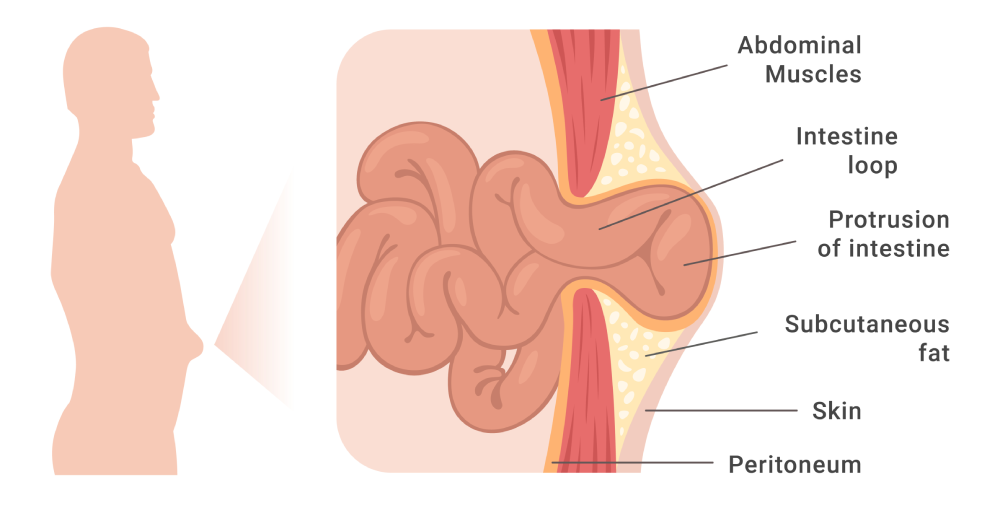
An umbilical hernia is a type of hernia that develops when tissue from inside the abdomen protrudes through an opening or weakened area in the abdominal wall near the belly button.
In adults, an umbilical hernia may appear as a soft bulge around the navel and may become more noticeable when coughing, straining, lifting heavy objects or standing for long periods. The bulge may reduce or become less noticeable when lying down.
Unlike some umbilical hernias in infants, which may close naturally as the abdominal muscles develop, umbilical hernias in adults generally do not resolve on their own and may require monitoring or surgical repair.
What Causes an Umbilical Hernia?
An umbilical hernia develops when there is a weakness or opening in the abdominal wall near the belly button, allowing tissue from inside the abdomen to push through. The causes and contributing factors may differ between infants and adults.
Umbilical Hernia in Infants
Umbilical hernias are relatively common in infants. During pregnancy, the umbilical cord passes through a small opening in the baby's abdominal muscles. After birth, this opening usually closes as the abdominal muscles develop.
An umbilical hernia may occur if the opening does not close completely, allowing a small amount of abdominal tissue to protrude through the area around the belly button. In many cases, umbilical hernias in infants close naturally as the abdominal wall becomes stronger during early childhood.
Umbilical Hernia in Adults
In adults, an umbilical hernia may develop when increased pressure within the abdomen pushes tissue through a weak area in the abdominal wall near the belly button.
Factors that may contribute to the development of an umbilical hernia include:
- Increased pressure within the abdomen.
- Being overweight or obese.
- Multiple pregnancies.
- Frequent heavy lifting or strenuous physical activity.
- Previous abdominal surgery.
In some cases, a person may also have a weakness in the abdominal wall that has been present since birth and persists into adulthood.
Umbilical Hernia Symptoms
An umbilical hernia may cause a visible bulge or swelling in or around the belly button. The size of the bulge may vary depending on body position or activities that increase pressure within the abdomen.
Common symptoms of an umbilical hernia may include:
- A soft bulge or swelling around the belly button
- Discomfort, pressure, or pain around the affected area
- Pain that worsens when coughing, straining, or lifting heavy objects
Some umbilical hernias may cause few or no symptoms. However, the hernia may gradually increase in size or become more uncomfortable over time.
What Are the Complications of an Umbilical Hernia?
While some umbilical hernias may remain small and cause few symptoms, they can sometimes lead to complications. In particular, an umbilical hernia may become incarcerated or strangulated if the tissue protruding through the abdominal wall becomes trapped.
Incarcerated Umbilical Hernia
An incarcerated umbilical hernia occurs when tissue, such as fatty tissue or part of the intestine, becomes trapped within the opening in the abdominal wall around the belly button and cannot be pushed back into the abdomen.
An incarcerated umbilical hernia may cause a firm or painful bulge around the belly button. The hernia may also become increasingly uncomfortable, particularly with movement, coughing, or straining. If an incarcerated hernia is left untreated, the blood supply to the trapped tissue may become compromised, potentially leading to strangulation.
Strangulated Umbilical Hernia
A strangulated umbilical hernia occurs when the blood supply to the tissue trapped within an umbilical hernia is reduced or completely cut off. This can cause the affected tissue to become damaged and, in severe cases, may lead to tissue death.
A strangulated umbilical hernia is a medical emergency that requires prompt treatment. Symptoms may include sudden or severe pain around the belly button, increasing swelling or tenderness, a firm or discoloured hernia bulge, nausea, vomiting, abdominal bloating, or difficulty passing stools or gas.
If you experience severe or worsening symptoms associated with an umbilical hernia, seek immediate medical attention.
Umbilical Hernia Surgery
Surgery may be recommended to repair an umbilical hernia that is causing pain or discomfort, increasing in size, or at risk of complications.
During umbilical hernia surgery, the protruding tissue is returned to its proper position within the abdomen, and the weakness or opening in the abdominal wall is repaired. Depending on the size and characteristics of the hernia, the repair may involve stitches alone or the use of surgical mesh to provide additional support.
The most suitable approach will depend on factors such as the size, complexity of the hernia, and whether you have had previous abdominal surgery.
Recovery for Hernia Surgery
Recovery following hernia surgery varies depending on the type of repair performed, the size of the hernia and individual factors.
You may experience some pain, swelling or discomfort around the surgical site during the initial recovery period. Your care team will provide guidance on wound care, pain management, physical activity and when you can return to work and other daily activities.
While many patients return to their usual activities within the same day, strenuous exercise and heavy lifting may need to be avoided for a period of time to allow the abdominal wall to heal properly. Follow-up appointments may also be arranged to monitor your recovery.
If you develop worsening pain, increasing swelling, fever, persistent vomiting or other concerning symptoms after surgery, seek medical advice promptly.