NUHS Institutions will NEVER ask you to transfer money or disclose bank details over a call.
If in doubt, call the 24/7 ScamShield helpline at 1799, or visit the ScamShield website at www.scamshield.gov.sg.

Acknowledging the significant challenges presented by Singapore's aging population, constrained healthcare workforce, and limited hospital bed capacity, Alexandra Hospital's Healthcare Redesign Team is dedicated to catalysing and facilitating care transformation through technology.
Our goal is to promote the adoption, dissemination, and enhancement of best practices with the assistance of technology. Ultimately, this will lead to the formation of the Alexandra Virtual Hospital.
Alexandra Virtual Hospital aspires to revolutionise Singapore's healthcare by creating a virtual medical ecosystem that transcends physical boundaries. We are committed to providing accessible, high-quality, and patient-centric healthcare services that empower individuals to take control of their personal health and well-being. Through cutting-edge technology, telemedicine, and a dedicated team of healthcare professionals, we aim to break down the barriers to healthcare access, ensuring that everyone, regardless of location or circumstance, can receive the best possible care.
At the heart of Alexandra Hospital's mission, we aim to redesign healthcare with and for humanity. Here we bring together industry leaders, pioneering startups, researchers, and healthcare professionals.
Your contributions are invaluable. Whether you possess innovative ideas, groundbreaking products, transformative solutions, specialised skills, or essential resources, we invite you to join hands with us.
Connect with our mission by filling the form.

We meticulously select and streamline technologies based on key themes that will help to close the care gaps and reimagine how care is delivered.

With an urgency to accelerate innovate and technology adoption, we seek
To sustain digital transformation at Alexandra Hospital, we adopt an agile approach to introducing technology, allowing for iterative and incremental improvement based on feedback from care teams, as well as patients and caregivers. Training and Change Management move in tandem to ensure that healthcare professionals can effectively harness the new technologies and workflows. Data is collected and evaluated to foster continuous improvement and innovation.

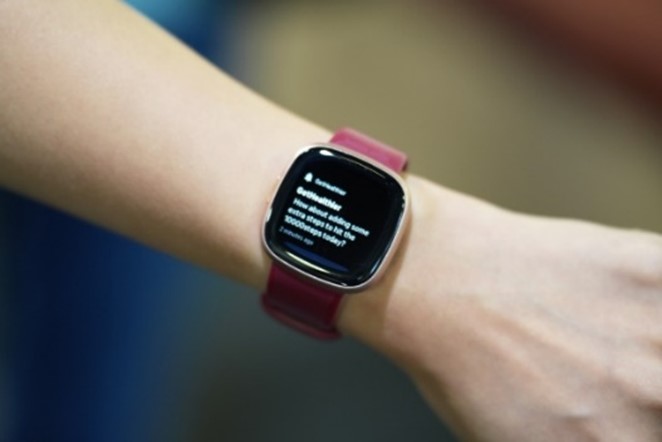
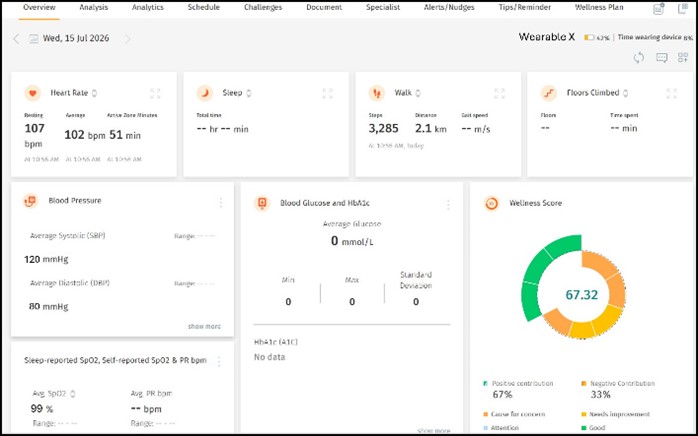
By combining wearable technology with a secure digital wellness platform, healthcare professionals can gain a better understanding of a person's health journey and provide more personalised support to help individuals achieve healthier lifestyles.
The platform enables continuous collection of selected health and activity information such as physical activity, heart rate, sleep patterns and other wellness indicators, allowing healthcare teams to identify trends over time instead of relying on isolated measurements taken during clinic visits.
By providing visibility into daily activity, sleep and other wellness indicators, participants can better understand how lifestyle choices influence their overall wellbeing.
Regular feedback and personalised insights from the platform and healthcare professionals to help individuals make informed decisions, celebrate progress and stay motivated on their journey towards better health.
For more information, visit Activate a Healthier Tomorrow | Activation Initiative

Healthcare is evolving beyond traditional bedside care by combining in-person clinical expertise with advanced virtual care technology.
By combining secure connectivity, high-quality audiovisual technology, and privacy-preserving workflows, virtual care solutions can help extend clinical expertise to every bedside, improve care coordination, enhance patient and staff experiences, and support a more resilient healthcare system through timely and efficient virtual care session.
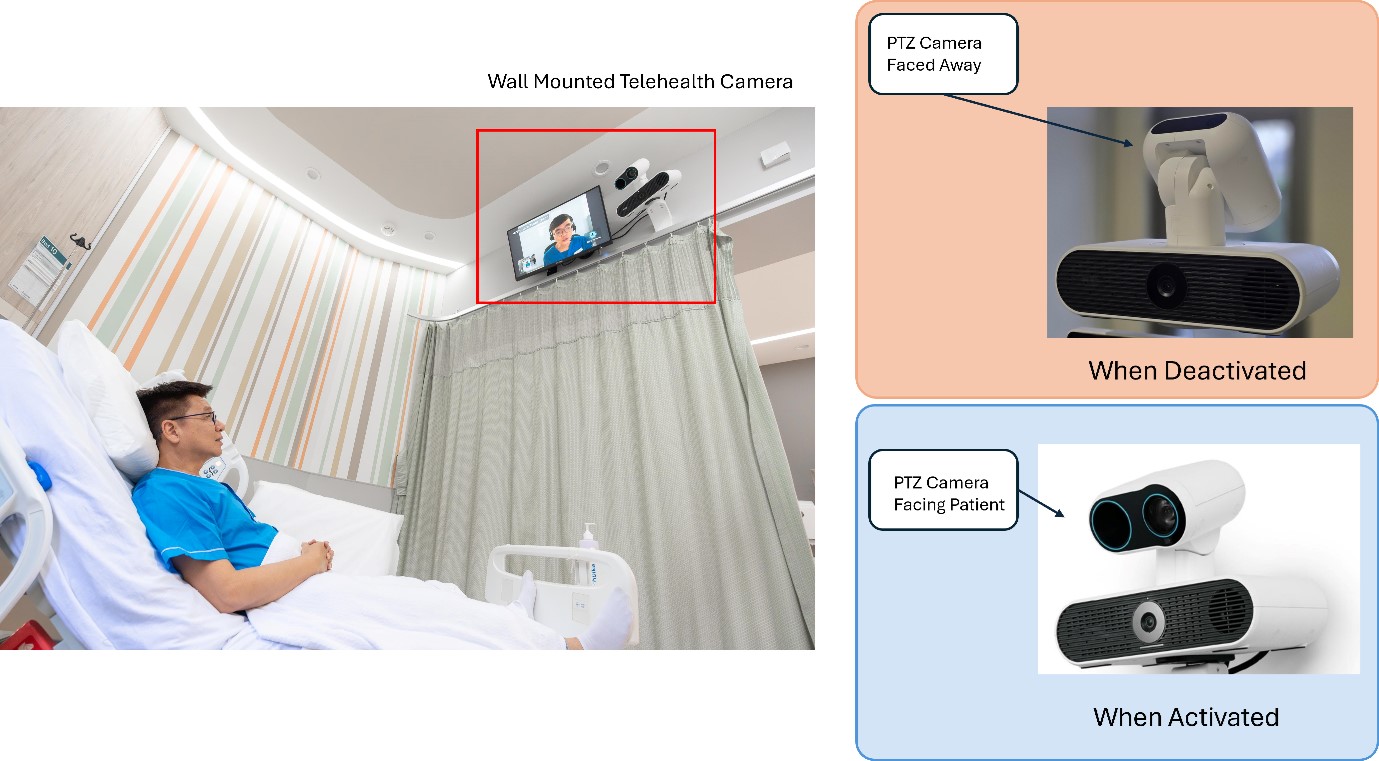
The system is intended for episodic care, meaning the camera is activated only when required for a specific clinical interaction and under the supervision of the care team. When not in use, the camera remains inactive and turned away, giving patients confidence that they retain privacy throughout their hospital stay.
Using high-resolution pan-tilt-zoom (PTZ) camera integrated into a secure virtual care platform, healthcare teams can remotely connect with patients whenever clinical support is needed, while ensuring that bedside care remains personal, timely, and compassionate. The camera's high-definition video, smooth remote pan, tilt and zoom capabilities, and clear two-way audio allow clinicians to assess patients with greater detail as if he was physically present for the interaction.
A cornerstone of our virtual hospital is the Smart Ward Ecosystem. Launched in October 2022, the Smart Wards serves as a dynamic sandbox for innovation. Beyond being a hub for swift technological advancements, it offers a safe and controlled setting for the observation of patient well-being and the delivery of care.
As we continue to introduce cutting-edge technologies, the Smart Ward Ecosystem will evolve and expand. This expansion will not only usher in new models of care but also elevate the quality of care we provide to our patients.
Additional Reading: Straits Times

The Smart Ward is meticulously designed to enhance the healing journey of our patients. Here's what sets it apart:

At Alexandra Hospital, we understand that the patients' well-being and safety are of utmost importance during their stay. Our commitment to providing top-quality care is reflected in the innovative technology we employ, particularly in the form of Smart beds.
Smart beds incorporate advanced sensors and indicators that enhance the quality of care and patient safety. These cutting-edge beds are more than just furniture; they are integral to our mission of delivering the best healthcare experience.
Smart beds may also come with features such as inflatable and therapeutic mattresses to relieve patient's pressure ulcers (beds sores).

Various brands of smart beds at Alexandra Hospital are currently undergoing trials as a proactive fall prevention tool. These beds are equipped with state-of-the-art motion sensors, weight distribution detectors, and alert systems.

By continuously monitoring the patient's position and vital signs, smart beds can swiftly detect any changes in position or weight distribution. If a patient attempts to leave the bed unsafely, an immediate alert will trigger, enabling care teams to respond swiftly and effectively.

Early warning can make a difference in our care team being able to deliver crucial interventions to save lives and prevent complications.
A bedside sensor, utilising thermography, machine learning, predictive algorithms, and image processing techniques, allows for the detection and prediction of bed-exits. The smart monitoring system allows a 15-second pre-exit lead time for care team to intervene before the patient assumes a standing position from the bed.

Smart glasses worn by personnel on-site allows clinicians at other locations to get a first-person view of the patient, which cannot be achieved with other devices such as smartphones. Providing a live stream video and audio of the situation, the glasses facilitate collaboration amongst the multi-disciplinary care team to assess, provide feedback and intervene in real-time; while the personnel wearing the Glass can be hands-free to perform clinical procedures conveniently.
Additional reading: Straits Times

Through the use of modern wireless heart monitor holter that is lighter and able to monitor longer periods of time, patients no longer need to use bulky devices with lots of wiring that collect 24 hours worth of data. Patients also are able to more comfortably carry their daily activities while the having holter monitors their vitals.
Following the monitoring period, the data collected by the holter is uploaded to a propriety platform for analysis by professional cardiac technicians.

3D Food Scanner, powered by artificial intelligence, captures and analyses 3 Dimensional (3D) Images of patient meals (before and after consumption), enables accurate and automated charting of a patients food and nutrition intake. This reduces our nurse's time needed to chart the patient's food intake.

Through the use of popular chat app and secure government electronic forms, patients are able to measure their vital signs (such as blood pressure, heart rate, glucose levels, weight and more) and report them to their care team at regular intervals. This provides a more comprehensive and up-to-date view a patient's health as compared to infrequent in-person visits.
Care teams are able to better to help patients manage chronic diseases, preventing complications, reducing potential hospitalisations and improve health outcomes remotely and without the need to visit the clinic.