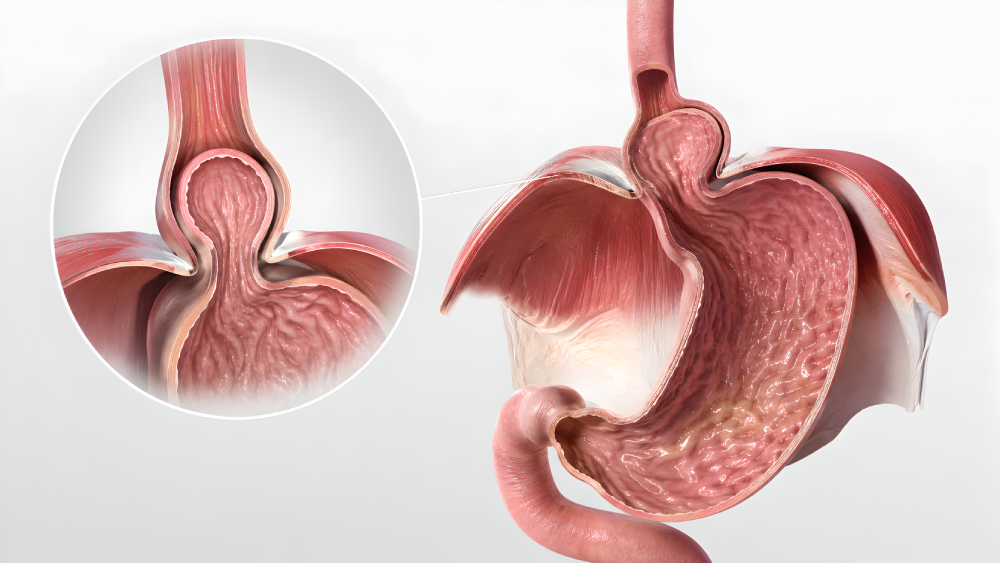
What Is a Hiatal Hernia?
A hiatal hernia occurs when part of the stomach pushes upward through an opening in the diaphragm called the hiatus and into the chest. The diaphragm is a large muscle that separates the chest from the abdomen that helps with breathing and the oesophagus passes through the hiatus before connecting to the stomach.
Hiatal hernias are relatively common, particularly with increasing age, and many people may not experience any noticeable symptoms. However, some hiatal hernias can contribute to acid reflux, heartburn, regurgitation, and other digestive symptoms. In some cases, particularly when the hernia is large or associated with complications, further medical assessment and treatment may be required.
What Causes a Hiatal Hernia?
A hiatal hernia develops when part of the stomach pushes through the opening in the diaphragm where the oesophagus passes into the abdomen. Although the exact causes of a hiatal hernia are not known, there are several factors that may contribute to its development.
Factors that may contribute to increased pressure in the abdomen include persistent coughing, frequent straining during bowel movements, repeated vomiting, pregnancy, and heavy lifting. Some people may also be born with a larger-than-normal hiatus, which can increase the likelihood of developing a hiatal hernia.
Types of Hiatal Hernia
There are different types of hiatal hernia. The two main types are sliding hiatal hernias and paraoesophageal hiatal hernias.
Sliding Hiatal Hernia
A sliding hiatal hernia is the most common type of hiatal hernia. It occurs when the junction between the oesophagus and stomach, together with a portion of the stomach, moves upward through the hiatus and into the chest. The position of the stomach may change depending on factors such as body position and pressure within the abdomen. Some people with a sliding hiatal hernia do not experience symptoms, while others may develop heartburn, acid reflux, or regurgitation.
Paraoesophageal Hiatal Hernia
A paraoesophageal hiatal hernia occurs when part of the stomach moves through the hiatus and into the chest alongside the oesophagus, while the junction between the oesophagus and stomach may remain in its usual position. Small paraoesophageal hernias may not cause symptoms. However, larger hernias can sometimes cause symptoms such as chest discomfort, difficulty swallowing, shortness of breath, or a feeling of fullness after eating. In some cases, part of the stomach may become trapped or twisted, which can lead to more serious complications and may require urgent medical attention.
Hiatal Hernia Symptoms
Many people with a small hiatal hernia do not experience any symptoms. When symptoms occur, they are often related to acid reflux, particularly if the hiatal hernia affects the normal barrier between the stomach and oesophagus.
Symptoms of a hiatal hernia may include:
- Heartburn or a burning sensation in the chest
- Acid reflux or regurgitation of food or stomach acid
- Difficulty swallowing
- Chest or upper abdominal discomfort
- Frequent belching or bloating
Larger hiatal hernias may sometimes cause additional symptoms, including shortness of breath, chest pressure or discomfort after meals. Symptoms can vary depending on the type and size of the hernia.
How Is a Hiatal Hernia Diagnosed?
A hiatal hernia may be suspected based on a person's symptoms and medical history. However, further tests may be required to confirm the diagnosis, determine the type and size of the hernia, or investigate symptoms such as persistent acid reflux or difficulty swallowing.
Common tests include X-rays to examine the oesophagus and stomach, and an upper endoscopy (gastroscopy), which allows the doctor to examine the oesophagus and stomach for a hiatal hernia or related conditions. In some cases, additional tests such as oesophageal manometry or a CT scan may be recommended to assess the hernia further or investigate associated symptoms.
What Are the Complications of a Hiatal Hernia?
Many hiatal hernias do not cause serious complications. However, larger or more complex hernias may sometimes lead to problems such as acid reflux, inflammation of the oesophagus, difficulty swallowing, or, in rare cases, obstruction or strangulation.
Gastroesophageal Reflux Disease (GERD)
A hiatal hernia may contribute to gastroesophageal reflux disease (GERD) by affecting the mechanisms that normally prevent stomach contents from flowing back into the oesophagus. This can cause symptoms such as persistent heartburn and regurgitation, although not everyone with a hiatal hernia develops significant acid reflux.
Oesophageal Complications
Persistent acid reflux can irritate and inflame the lining of the oesophagus. Over time, this may lead to complications such as oesophagitis or narrowing of the oesophagus, which can cause difficulty swallowing. Further assessment may be recommended for people with persistent reflux symptoms or swallowing difficulties.
Obstruction or Strangulation
Larger paraoesophageal hiatal hernias may cause part of the stomach to become trapped within the chest, potentially leading to an obstruction. In rare but serious cases, the blood supply to the trapped stomach may be reduced or cut off, resulting in strangulation. Sudden or severe chest or upper abdominal pain, persistent vomiting, or an inability to tolerate food or liquids may indicate a serious complication requiring urgent medical attention.
How Is Hiatal Hernia Treated?
Lifestyle Changes
Lifestyle changes may help reduce symptoms of acid reflux associated with a hiatal hernia. Depending on an individual's symptoms, these may include eating smaller meals, avoiding lying down shortly after eating and identifying foods or drinks that trigger reflux symptoms.
Maintaining a healthy weight may also help reduce pressure within the abdomen. Some people may find it helpful to avoid eating large meals close to bedtime and to elevate the head of the bed when experiencing reflux symptoms at night.
Medications
Medications may be prescribed to help manage symptoms caused by acid reflux. These medications do not remove the hiatal hernia itself but may help reduce the amount of stomach acid or relieve irritation of the oesophagus.
Hiatal Hernia Surgery
Surgery is not required for every hiatal hernia. It may be considered when symptoms persist despite lifestyle changes and medication, when a large hernia is present or when complications develop.
Hiatal hernia surgery generally involves moving the stomach back into the abdomen and repairing or tightening the opening in the diaphragm to reduce the likelihood of the stomach shifting back into the chest. Patients who undergo a hiatal hernia surgery may also need to follow a special diet for a period of time after the surgery.