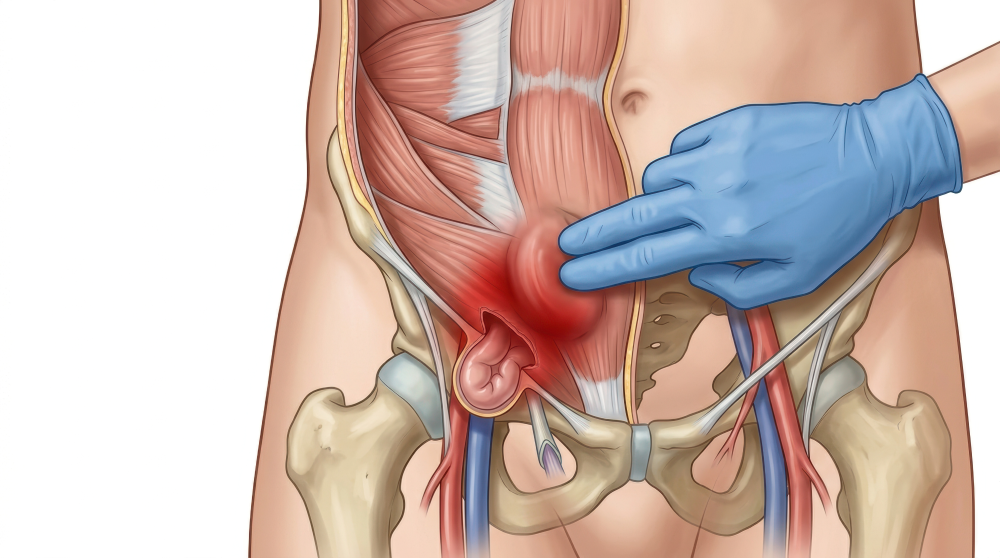
What Is a Groin Hernia?
A groin hernia develops when part of the abdominal contents pushes through a weakness or opening in the muscles of the lower abdomen. The resulting bulge appears in the groin region, where the abdomen meets the upper thigh. Groin hernias may develop gradually over time due to weakening of the abdominal wall, or may occur when increased pressure inside the abdomen forces tissue through an existing weak spot.
However, not all groin hernias show symptoms immediately. Some remain small and painless, while others enlarge over time and become increasingly uncomfortable. As a groin hernia does not heal on its own, it is important to seek medical attention if you notice a persistent lump or experience discomfort in the groin.
The two main types of groin hernias are inguinal hernia and femoral hernia. Although both occur in the groin, they differ in their location, who they commonly affect, and their risk of complications.
Inguinal Hernia
An inguinal hernia is the most common type of groin hernia, and it occurs when tissue pushes through a weakness in the inguinal canal, a natural passage in the lower abdominal wall.
Inguinal hernias are significantly more common in men because of differences in anatomy. They may be present from birth due to incomplete closure of the inguinal canal or develop later in life as the abdominal muscles weaken with age.
Many people first notice a soft lump in the groin that becomes more prominent when standing, coughing, laughing, or exercising. The lump may flatten or disappear when lying down.
Indirect Inguinal Hernia
An indirect inguinal hernia occurs when abdominal tissue protrudes through the deep inguinal ring, often due to a congenital weakness caused by incomplete closure of the inguinal canal before birth. It is the most common type of inguinal hernia and can occur at any age, including in infants, children, and young adults.
Direct Inguinal Hernia
A direct inguinal hernia develops when abdominal tissue pushes through a weakened area of the abdominal wall. Unlike an indirect hernia, it is usually acquired rather than present from birth and is more commonly seen in older adults as the abdominal muscles weaken with age. Factors such as chronic coughing, heavy lifting, obesity, and repeated straining can increase pressure within the abdomen and contribute to the development of a direct inguinal hernia.
Femoral Hernia
A femoral hernia occurs when abdominal tissue pushes through the femoral canal, a narrow space located just below the inguinal ligament near the upper thigh.
Although femoral hernias account for a smaller proportion of groin hernias, they are clinically significant because they have a greater tendency to become incarcerated or strangulated. These complications occur when the herniated tissue becomes trapped at the hernia neck or its blood supply is interrupted, requiring urgent surgical treatment.
Femoral hernias are more common in women, particularly older women, due to differences in pelvic anatomy. They may also develop in people who experience increased pressure within the abdomen, such as from chronic coughing, obesity, pregnancy, or heavy lifting.
Unlike inguinal hernias, femoral hernias may present as only a small lump or no visible swelling at all. Some patients seek medical attention only after developing sudden groin pain or symptoms of bowel obstruction caused by a trapped hernia. Due to the higher risk of complications, femoral hernias are generally recommended for surgical repair soon after diagnosis, even if symptoms are mild.
Groin Hernia Symptoms
The symptoms of a groin hernia can vary depending on its size, type, and whether complications have developed. Some hernias cause only a painless lump, while others may lead to discomfort that worsens with physical activity or prolonged standing.
Common groin hernia symptoms include:
- A visible or palpable lump in the groin.
- Pain, aching, or discomfort in the groin, especially when lifting, coughing, bending, or straining.
- A feeling of heaviness or pressure in the groin.
- A burning or pulling sensation around the bulge.
- A lump that becomes more noticeable when standing and may disappear when lying down.
In many cases, symptoms develop gradually as the hernia enlarges. While small hernias may not interfere with daily activities, larger hernias can become increasingly uncomfortable over time.
When Is Groin Hernia a Medical Emergency?
A groin hernia requires immediate medical attention if it becomes incarcerated (trapped) or strangulated (its blood supply is cut off). A strangulated hernia is a surgical emergency because the affected bowel can become damaged if not treated promptly.
Seek urgent medical care if you experience symptoms such as:
- Sudden, severe groin or abdominal pain.
- A painful lump that cannot be pushed back into the abdomen.
- Redness, swelling, or tenderness over the lump.
- Inability to pass stool or gas.
Prompt treatment can help prevent serious complications, including bowel obstruction and tissue damage.
What Causes a Groin Hernia?
A groin hernia develops when a weakness in the abdominal wall combines with increased pressure inside the abdomen, allowing tissue to push through the weakened area.
Some people are born with a weakness that makes them more likely to develop a hernia, while others develop one later in life as muscles naturally weaken with age.
Factors that may increase the risk of developing a groin hernia include:
- Ageing and weakening of the abdominal muscles.
- Heavy lifting, particularly without proper technique.
- Chronic coughing.
- Persistent constipation and straining during bowel movements.
- Obesity.
- Pregnancy.
- Previous abdominal or groin surgery.
Although strenuous activity can trigger symptoms, it is often not the sole cause. Many hernias develop gradually over months or years due to a combination of underlying muscle weakness and repeated increases in abdominal pressure.
Surgery is the only treatment that repairs a groin hernia. Depending on the type and size of the hernia, your surgeon may recommend either an open or minimally invasive (laparoscopic) approach. In most cases, a surgical mesh is used to reinforce the weakened abdominal wall. Mesh repair has been shown to reduce the risk of the hernia recurrence compared with repair using sutures alone.
Risks and Complications
As with any surgical procedure, groin hernia surgery carries some risks, although serious complications are uncommon. Potential risks include bleeding, infection, pain, bruising, swelling, and recurrence of the hernia. In some cases, patients may experience persistent groin pain or numbness due to irritation or injury to nearby nerves. Your surgeon will explain the potential benefits and risks of surgery and recommend the most appropriate treatment based on your individual condition.